Concept Build
How I Would Build the Barkleys Website: Premium, Product-Led, and Built for Flavor Discovery
Short answer: This is a concept-build breakdown for a premium mint brand website. The goal is not only to make the tins look beautiful, but to help visitors understand the flavor range, trust the ingredients, and move naturally toward shopping or finding a store.
The strategic problem
Premium packaged goods need more than a product grid. The website has to make the product feel worth choosing before the visitor compares price. For Barkleys, I would build around three ideas: intensity, tradition, and flavor variety.
The homepage should answer the main buyer questions quickly: What makes this different? Which flavor do I want? Can I buy it now or find it nearby?
Flavor browsing into product detail pages, followed by shop-now actions or store-finder intent.
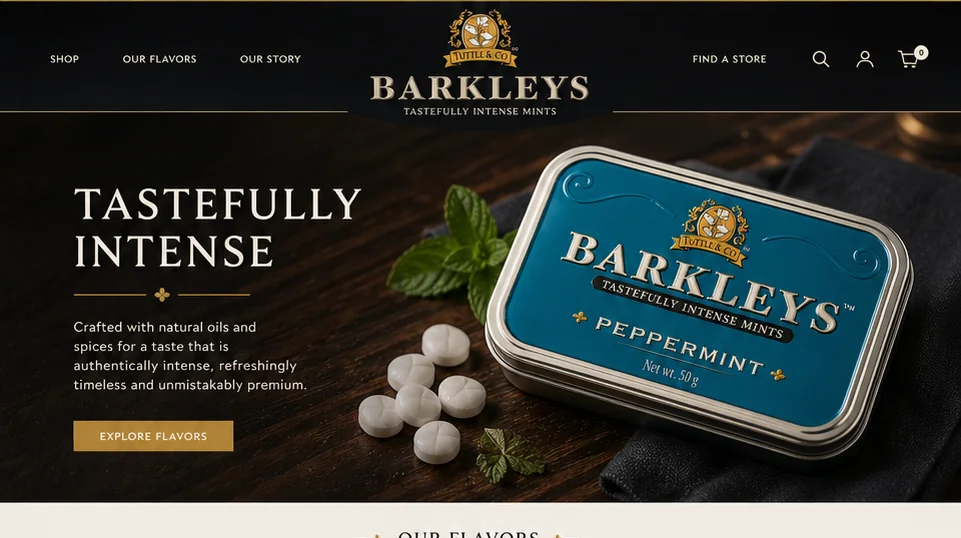
Dark premium photography, gold accents, serif typography, and product tins large enough to inspect.
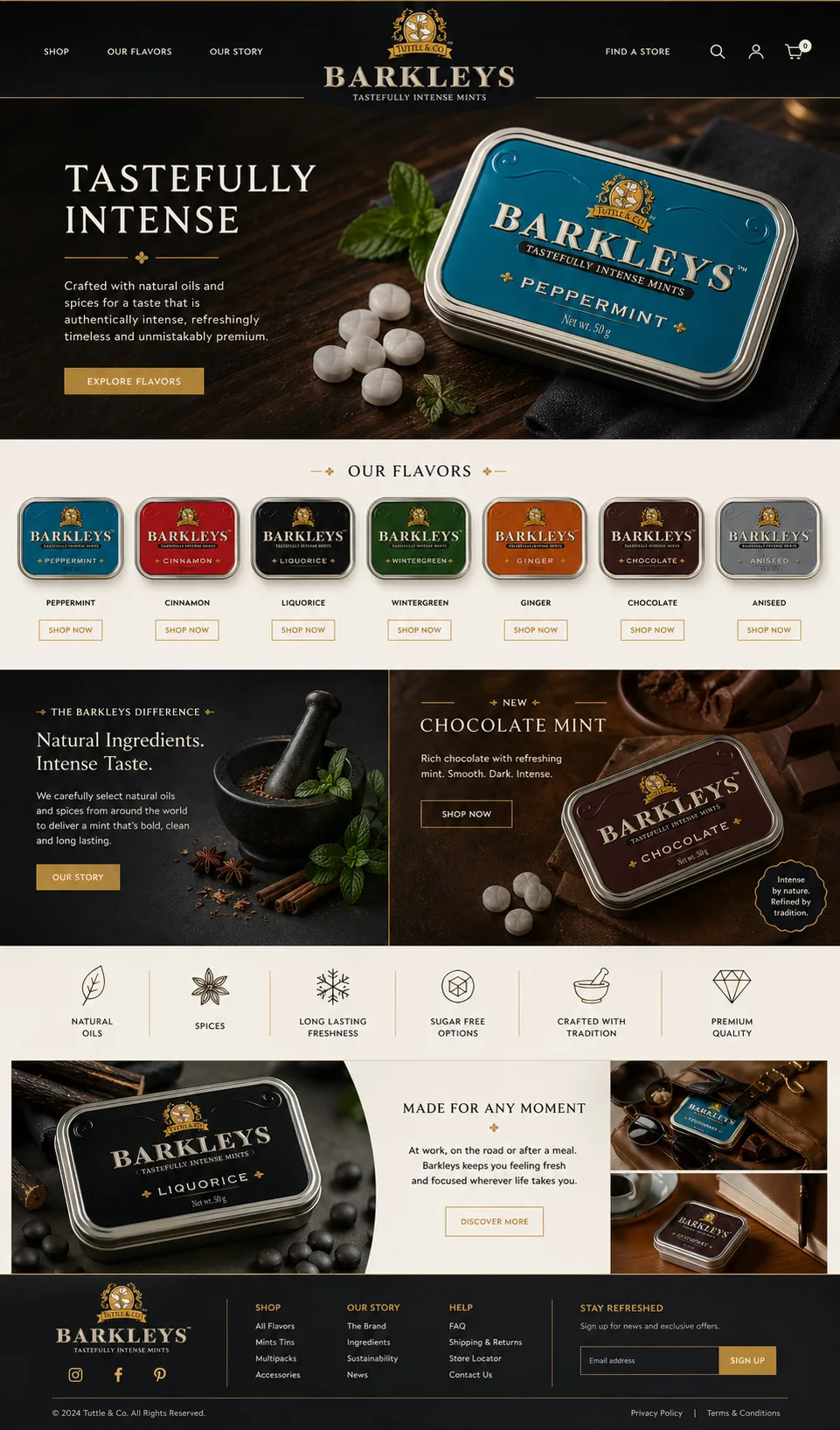
Natural oils, spices, long lasting freshness, sugar-free options, tradition, and premium quality become scannable proof points.
Every flavor card needs a direct route to purchase, but the experience should still feel refined rather than discount-led.
Homepage structure I would use
- Premium hero: one flavor, one product tin, one promise, one strong CTA.
- Flavor shelf: the full range shown as collectible tins with individual shop actions.
- Difference section: natural ingredients and intense taste explained with ingredient imagery.
- Featured flavor: one product story at a time, useful for campaigns and seasonal pushes.
- Proof icons: fast scanning for ingredient, freshness, quality, and tradition claims.
- Moment-based use case: at work, on the road, after a meal, or as a small everyday carry item.
Why the flavor row matters
The flavor strip is the commercial core of the page. It lets a visitor understand the range in seconds: peppermint, cinnamon, liquorice, wintergreen, ginger, chocolate, and aniseed. I would make each tin clickable, track flavor interest, and use that click data to decide which products deserve more homepage real estate.
What I would build next
- Individual flavor pages with tasting notes, ingredients, and related products
- A store finder for retail availability
- Bundles or multipacks for people who want to try the full range
- Email capture tied to new flavors, restocks, and offers
- Product schema for richer search results
- Analytics events for flavor clicks, shop clicks, and store-finder clicks
The takeaway
A premium product website should make the product feel desirable before it asks for the sale. For Barkleys, that means strong product photography, controlled luxury cues, clear flavor navigation, and e-commerce paths that feel natural rather than pushy.
Get a custom plan for your business
I'll review your goals and send a clear plan with timeline and price. No obligation.